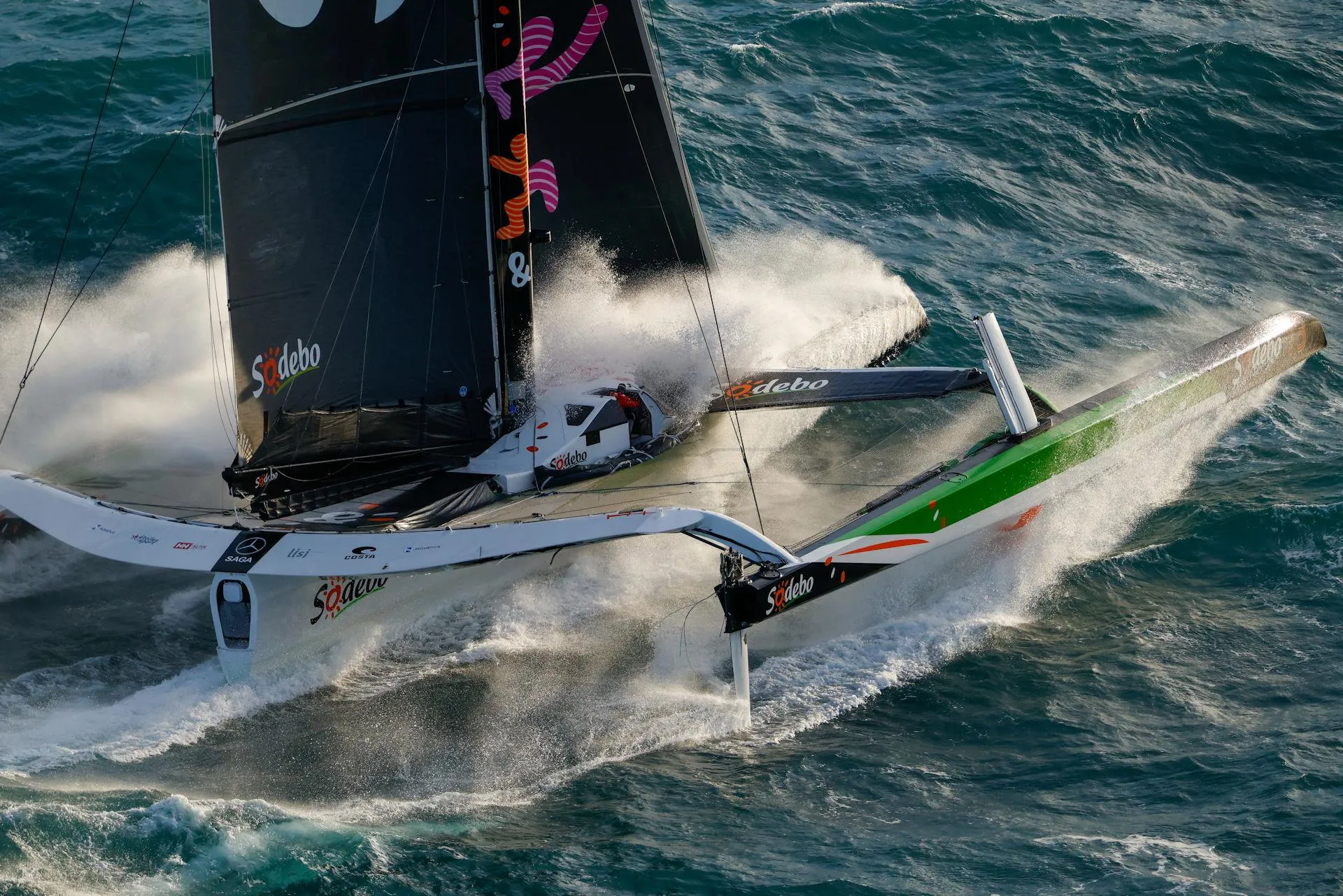
Two ground breaking records were broken in the Jules Verne Trophy this year – The Famous Project officially became the first all-female crew to sail non-stop and unassisted around the world and Sodebo Ultim earned a new record as the fastest sailing craft to lap the planet.
Record breakers
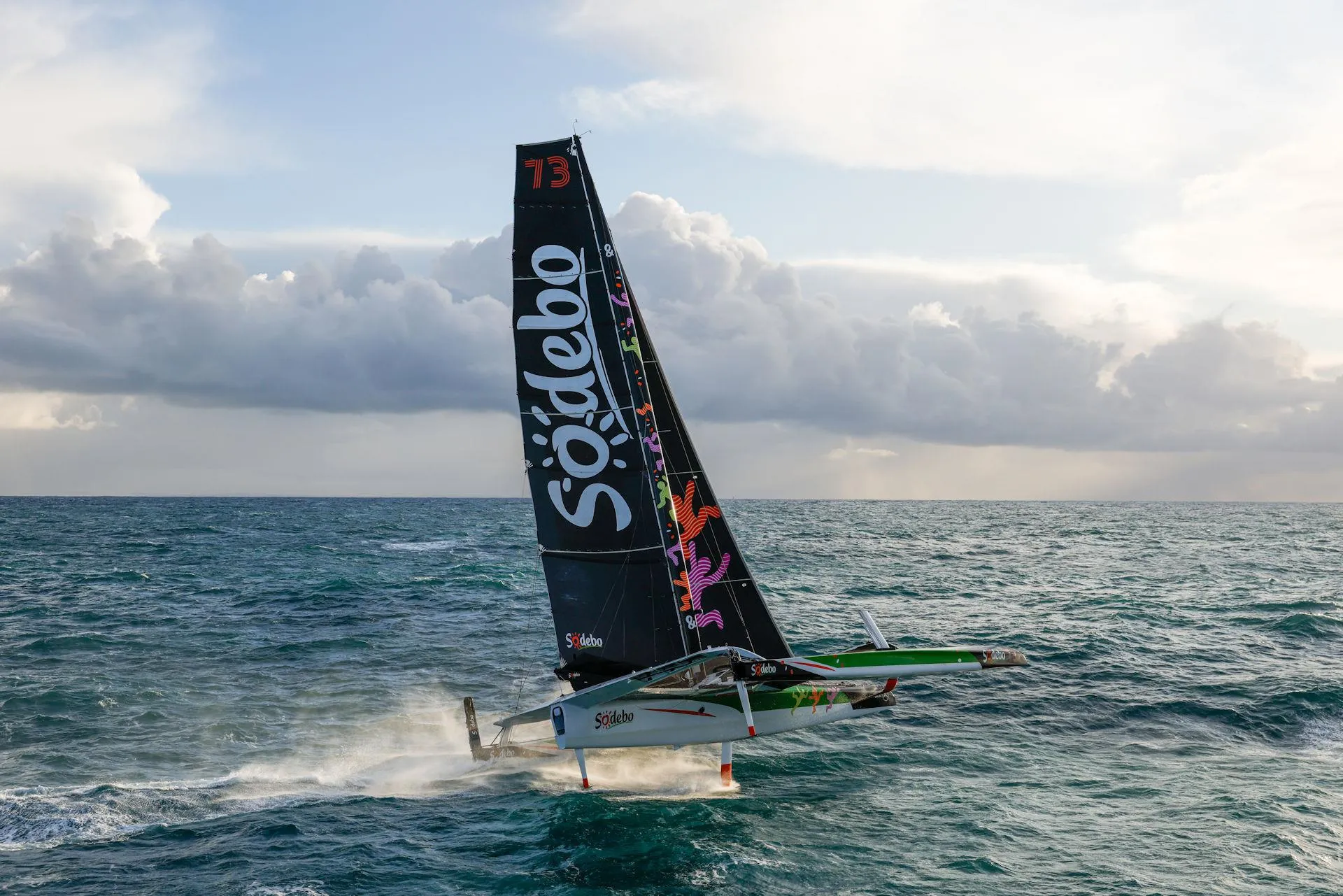
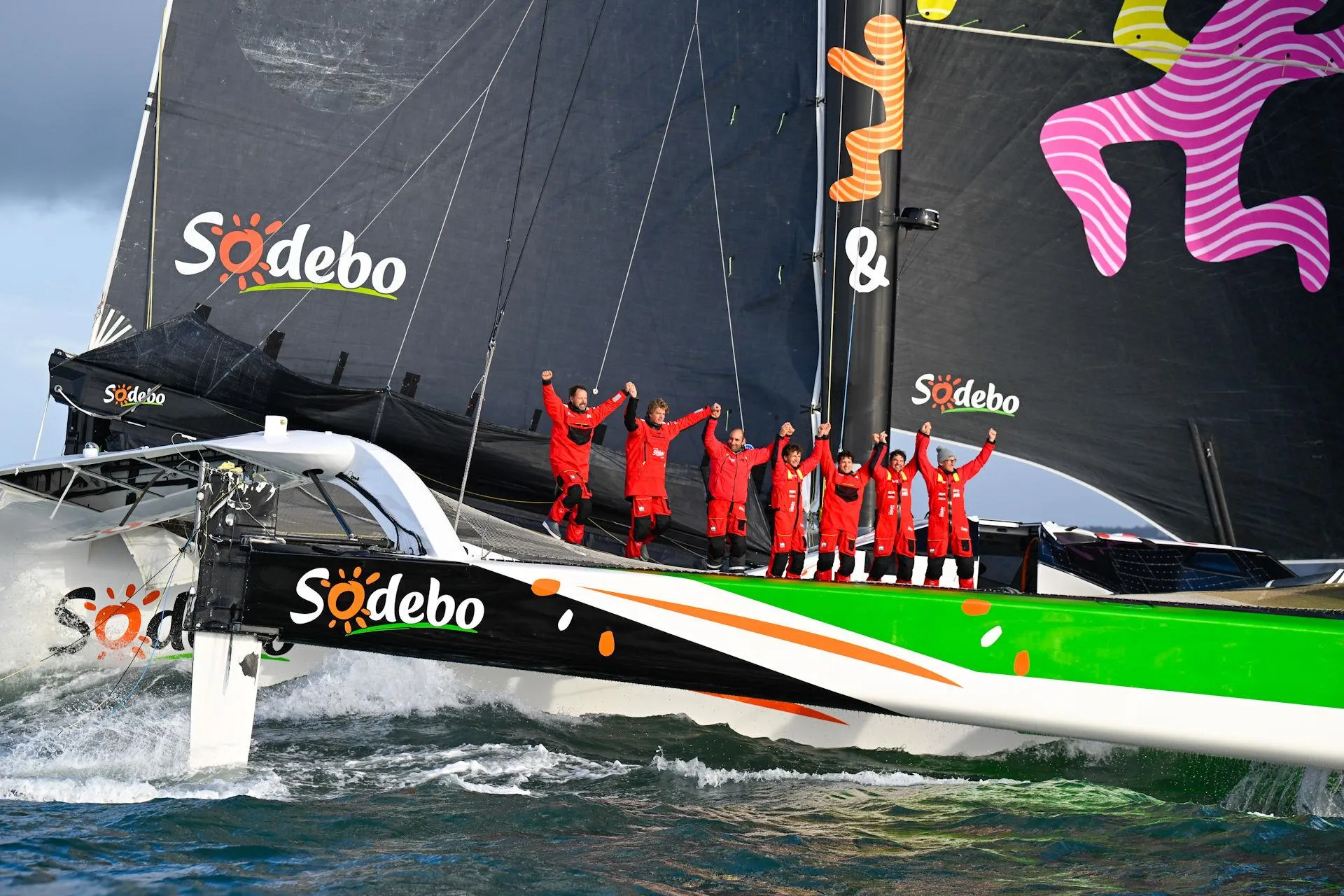
Thomas Coville and his crew of Benjamin Schwartz, Frédéric Denis, Pierre Leboucher, Léonard Legrand, Guillaume Pirouelle on Sodebo Ultim sailed 28,315 miles non-stop at an average speed of 27.17 knots to win the trophy in a new fastest time of 40 days, 10 hours, and 45 minutes at sea – 12 hours and 44 minutes faster than Francis Joyon’s long-standing previous record, which had been held by IDEC Sport since 2017. It took nine years and thirteen attempts, including three by Sodebo, for this iconic offshore racing record to be broken.
Patricia Brochard, co-chair of Sodebo:
“It’s an intense joy, a mix of relief and excitement. We’re surrounded by family, friends, partners, and many Sodebo employees. We’re very happy and very proud to share this moment with them, just as our sailors have done throughout their journey. It’s the culmination of the wonderful story we’ve been writing together for 27 years with Thomas (Coville). What we love is seeing men and women united around a common project, with unwavering determination. They’re demonstrating here what’s important to us every day in our company. They’ve moved forward together, they’ve grown together, just like our employees, who are highly motivated and committed to growing Sodebo.”
The sailors were not spared by the conditions, having to lengthen their route in the South Atlantic, avoid icebergs in the Southern Ocean, and withstand Storm Ingrid as they approached the finish line. This did not prevent them however from reaching Ushant-Equator and the Pacific Ocean faster than ever before setting two new records, and establishing benchmark times at each cape (Good Hope, Leeuwin, and Horn).
Watch how Sadebo went on to secure the new record.
-
- Pic: @Lloyd Images
-
- Pic:@Lloyd Images
Challenge upon challenge
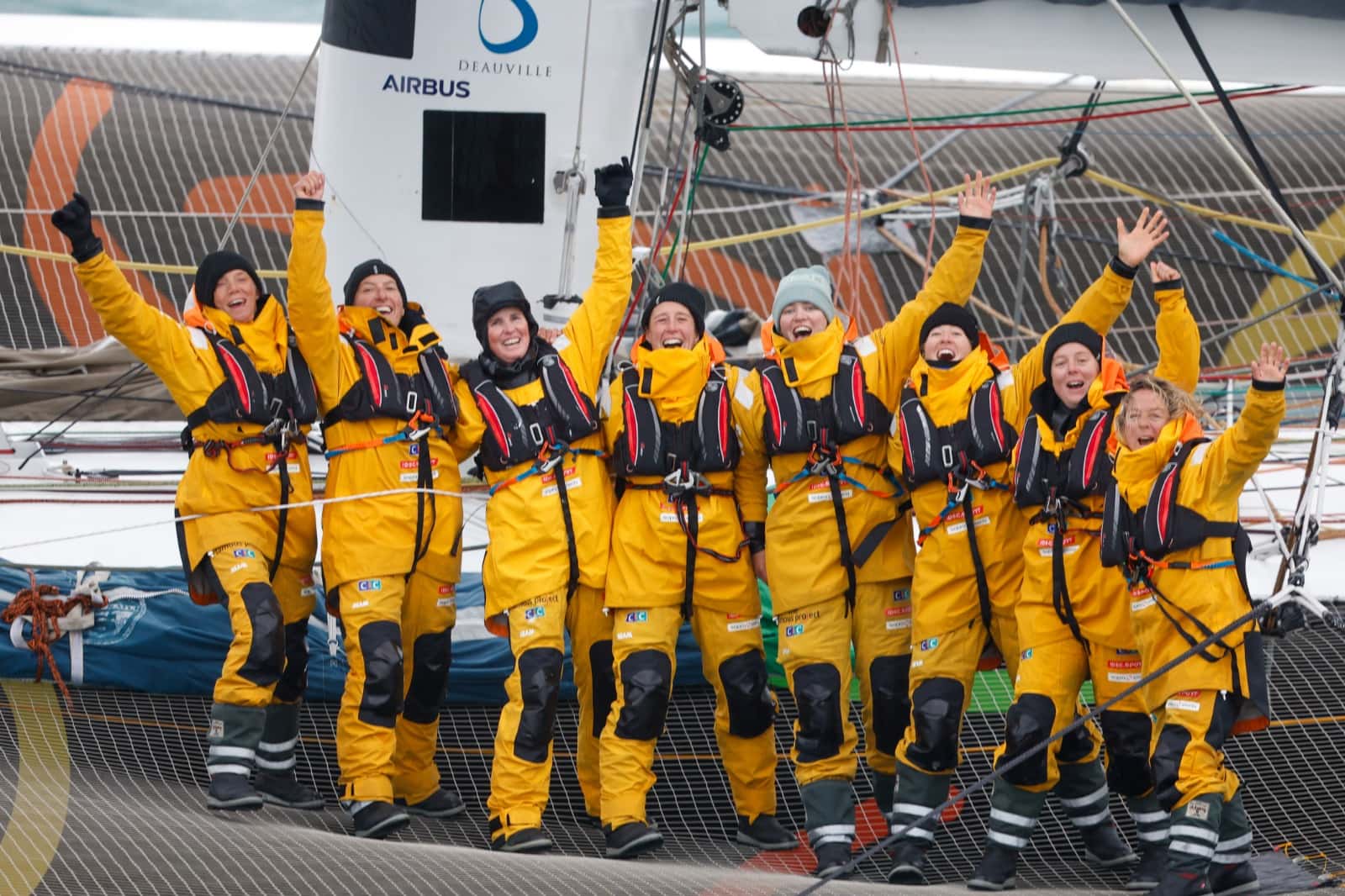
The eight-woman team crossed the finish line between Ushant and the Lizard at 1200hrs on Monday 26 January 2026, completing their circumnavigation in 57 days, 22 hours, and 20 minutes. This marks the first successful all-female bid in the history of the Jules Verne Trophy, following the 1998 attempt by Tracy Edwards’ Royal & Sun Alliance which ended in a dismasting.
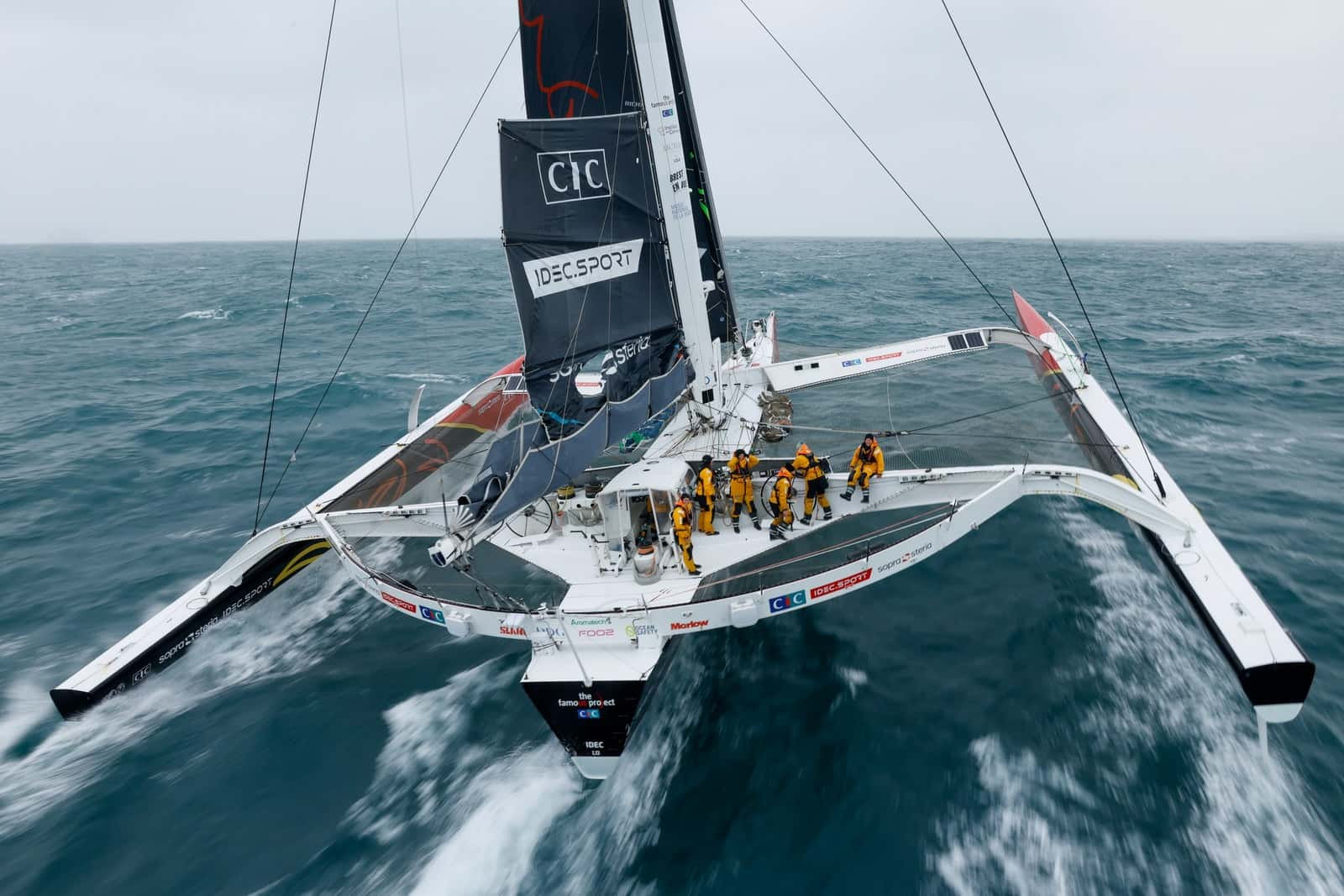
The Famous Project was masterminded and skippered by former Vendée Globe sailor Alexia Barrier, together with British co-skipper Dee Caffari MBE, and an international crew of Annemieke Bes, Rebecca Gmür Hornell, Deborah Blair, Molly LaPointe, Támara Echegoyen and Stacey Jackson, sailing the former Idec Sport, the previous holder of the Jules Verne Trophy record at 40d 23h 30m.
The voyage was a masterclass in resilience, as the crew battled significant mechanical failures and severe weather conditions aboard the aging trimaran IDEC Sport. Early steering and halyard issues were followed by a mid-ocean entanglement with fishing gear that left their starboard foil irreparably damaged. The team’s greatest challenge arrived in the final weeks when their mainsail tore in half during heavy winds.
Despite Storm Ingrid’s 45-knot gusts shredding the remaining canvas and leaving them with little more than a wingmast and headsails for the final stretch, the crew refused to retire. They prioritised their goal of setting a historic precedent, proving that their determination was as durable as the vessel they sailed.
-
- Pic:@Lloyd Images
-
- Pic: @Lloyd Images
Being in the arena
As they arrived in Brest, the significance of their achievement was captured by co-skipper Dee Caffari MBE through the words of Theodore Roosevelt, honouring the “woman in the arena” with an adaptation of Roosevelt’s famous ‘Man in the Arena’ speech.
Dee also summed up her experience on the Jules Verne: “Every passage is unique and a blessing. I know that when we set out, not all sailors manage to make it through, so when we do, it’s special. I’m lucky that every passage has been very different for me. Solo, in a team, leading a team, with the wind behind us and against us. This time, it’s with a team of remarkable sailors on a very special boat, and it took very little time.
The South was very different from my previous experiences. It wasn’t as hostile, but that said, the sea conditions weren’t always easy. On a maxi trimaran, sea conditions are paramount. This machine is just begging to go fast, so it was crucial to manage it in difficult sea conditions. The other major difference is that this boat has a high freeboard, which makes it feel like you’re further away from the sea and therefore less wet and cold than I remember”.
Watch how this all female team managed to be the first to complete the race.